rejuan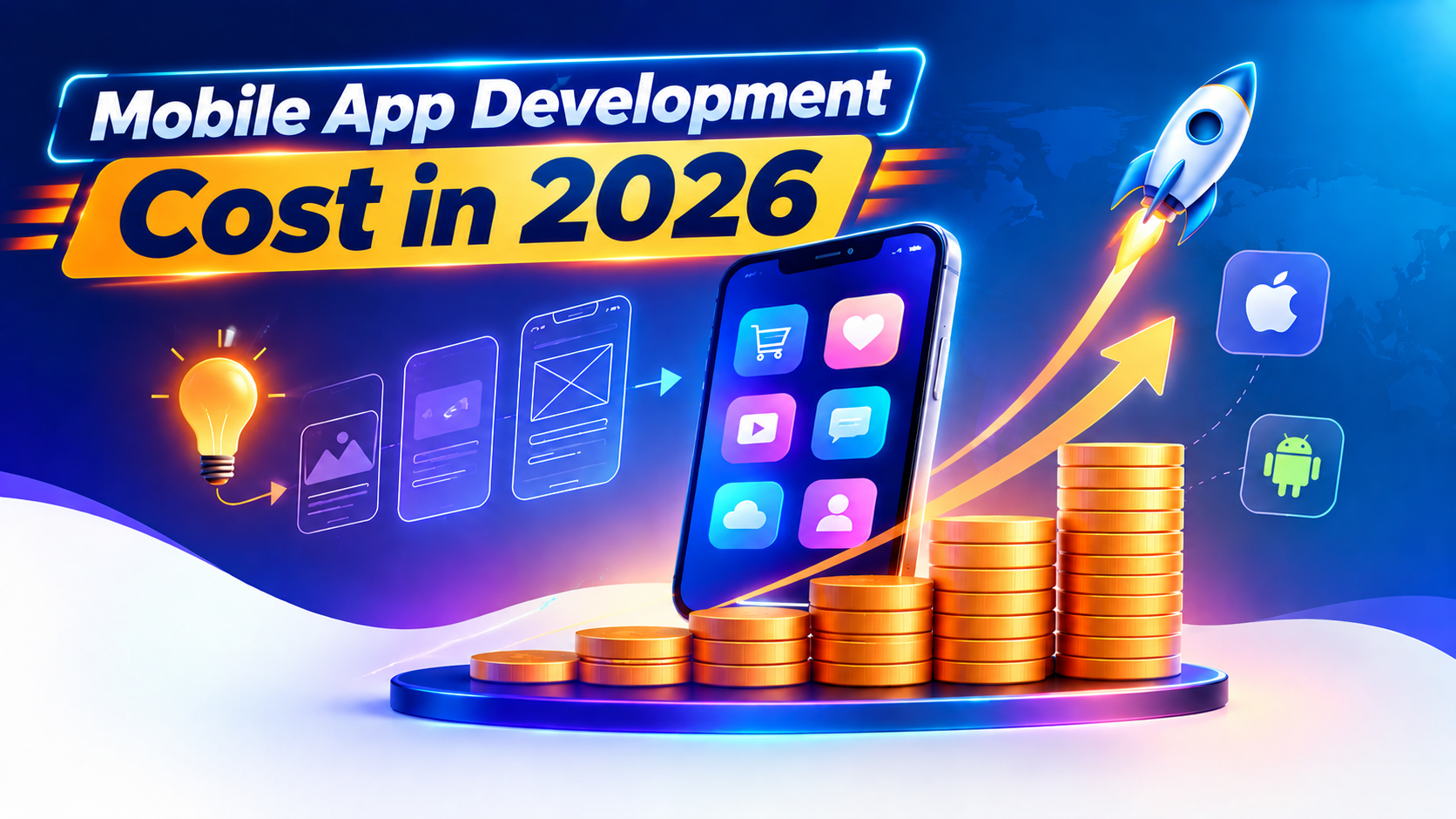
Building a mobile app in 2026 costs between $15,000 and $300,000 or more. Three factors decide where you land on that range — app complexity, platform choice, and where your development team is based. AI-assisted coding tools have changed the math, too — a solo founder can now launch a simple app for under $300 in tooling costs. Many estimates also overlook ongoing costs like maintenance, hosting, third-party services, and updates.
If you’re wondering how much does it cost to create an app, the answer depends on your business goals, platform, and the factors that affect app development costs. This guide explains every major cost driver, realistic pricing by app type, and practical ways to plan your budget.
Average Mobile App Development Cost by Complexity
Usually, an app’s price depends on complexity, not feature count alone. Four tiers define the market in 2026 — each shaped by different backend demands, integrations, and infrastructure needs.
Basic or Simple MVP App
Basic MVP apps run $15,000 to $35,000, wrapped up in 3 to 4 months. This tier stays on one platform with a simple login and local data storage — no custom backend or outside servers involved. You are testing an idea, not building infrastructure.
Medium Business App
Expect to pay $25,000 to $85,000 for a medium business app that generally takes 5 to 8 months. This tier connects to real backend services — payment gateways, notification servers, and outside APIs — instead of running locally. That backend traffic drives the cost, not extra screens.
Complex App
Complex apps land between $85,000 and $150,000, running 8 to 12 months. This tier processes data in real time — syncing information across devices instantly and running AI features that call a model constantly. Live processing sets the price here, not the interface.
Enterprise App
At the top end, enterprise apps cost $150,000 to $300,000 or more, running 12 to 18 months. This tier links to legacy CRM and ERP systems, runs across multiple servers, and meets strict compliance rules. That infrastructure work absorbs most of the budget.
| App Type | Estimated Cost | Timeline |
|---|---|---|
| Simple MVP | $15k–35k | 3–4 months |
| Medium Business App | $25k–85k | 5–8 months |
| Complex App | $85k–150k | 8–12 months |
| Enterprise App | $150k–300k | 12–18 months |
What Factors Affect Mobile App Development Cost?
Several factors affect app development costs, including app complexity, backend infrastructure, platform choice, and your development approach.
App Complexity
A basic app with a login screen and a simple dashboard needs far fewer development hours than one with live data, multiple user roles, or custom logic. The more custom workflows, integrations, and backend processing your app requires, the higher the development effort.
Platform Choice
- iOS: Best for Apple-first audiences and premium consumer apps. Development uses Swift and targets a smaller range of devices.
- Android: Supports a much wider device ecosystem, which often increases testing time and quality assurance effort.
- Cross-platform: Flutter and React Native reduce development and maintenance costs by sharing one codebase across both platforms.
UI/UX Design
Template-based design keeps costs low and timelines short. Custom design costs more — wireframes, prototypes, and original visuals all take design hours, but it pays off in how the app looks, feels, and converts.
App Store Optimization
If you plan to launch on the Apple App Store or Google Play, App Store Optimization (ASO) helps improve your app’s visibility and increase organic downloads. ASO is usually a post-launch marketing activity rather than a core development expense, but some businesses include it in their overall launch budget.
Backend Infrastructure
Server-side infrastructure stores data, handles business logic, and connects your app with external services. As traffic, integrations, and processing requirements grow, development costs increase.
Third-Party Integrations
Payment gateways, maps, and analytics tools save you from building everything from scratch, however, each one adds setup time, testing, and a bit of ongoing maintenance once it’s live.
AI-Powered Features
AI features carry a different kind of cost. Every model call adds a small running expense, and every AI response needs testing, since outputs vary. Add a data pipeline to feed the model clean input, and the total climbs fast.
Developer Location
Hourly rates for app development vary significantly by region. Hiring an experienced app developer in North America usually costs much more than hiring one in South Asia. Location alone can double or halve your total budget.
Security and Compliance
Apps that handle sensitive data such as health records, payments, personal information — need encryption, secure authentication, and often formal compliance work like GDPR or HIPAA. Skipping this early costs far more to fix later.
Mobile App Development Cost by Feature
Every feature affects your development budget differently. Some are a few days of work — others reshape your entire architecture.
| Feature | Relative Cost Impact | Why It Affects Cost |
|---|---|---|
| Login | Low | Standard auth libraries handle most of the work — email, phone, or single sign-on all follow well-tested patterns. |
| Payments | Medium | Payment gateways need PCI-compliant handling, error states for failed transactions, and testing across currencies or providers. |
| Chats | High | Real-time messaging needs a persistent connection, message storage, and delivery confirmation — all running live, not on request. |
| Push Notifications | Low | Most platforms offer built-in notification services, so the setup is quick even though the logic behind targeting can grow later. |
| Maps | Medium | Location features pull from third-party APIs, and costs rise fast if the app needs live tracking instead of a static pin. |
| AI Chatbot | Very High | Every response calls a model, needs test coverage for inconsistent output, and depends on a data pipeline feeding it clean input. |
| Video Calling | Very High | Live video needs low-latency infrastructure, bandwidth management, and fallback handling for weak connections — few teams build this from scratch. |
| Admin Dashboard | Medium | Dashboards multiply work because every data view needs its own query, permission check, and layout. |
| Analytics | Low | Most teams plug in an existing analytics SDK rather than build tracking from the ground up. |
| Social Login | Low | Providers like Google and Apple supply ready-made SDKs, so integration is mostly configuration, not custom code. |
These development cost ranges provide a practical benchmark — but every app development project requires its own cost estimate.
Hidden App Development Costs
Most quotes cover design and coding only. These costs surface after the build starts:
- Deployment: App Store and Play Store submission, provisioning, release management.
- QA: A separate testing cycle beyond developer checks, usually 15–20% of the build cost.
- Hosting: Server and database costs that scale with your user base.
- Monitoring: Crash reporting, uptime tracking, performance dashboards.
- App Store fees: $99/year for Apple, $25 one-time for Google.
- Bug fixes: Post-launch patches for issues that surface once users start downloading.
How to Reduce Mobile App Development Costs Without Compromising Quality
A smaller budget doesn’t mean a weaker app. These seven habits cut costs without cutting corners.
- Build an MVP first: Launch with the smallest version that solves one real problem, then let user feedback — not guesswork — decide what gets built next.
- Prioritize core features: List every feature you want, then cut the list to what the app cannot function without. Everything else waits for version two.
- Use cross-platform frameworks when it makes sense: Flutter and React Native cover iOS and Android from one codebase, cutting development time by roughly a third.
- Reuse existing APIs: Payment processing, maps, and authentication already exist as tested, ready-to-integrate services. Building them from scratch wastes the budget on solved problems.
- Plan the roadmap early: A clear feature roadmap, mapped out before development starts, prevents the mid-project scope changes that quietly double timelines and costs.
- Choose an experienced development partner: Experienced app development companies usually identify expensive mistakes before they affect your timeline or budget.
- Avoid unnecessary custom features in version one: Custom animations and one-off UI flourishes look nice, but they add weeks of work for a feature most users won’t notice.
How to Estimate Your Mobile App Budget
A clear plan helps you estimate costs more accurately and prevents unnecessary spending during development. Start with these five practical steps:
- Define Business Goals
Start with the problem the app solves, not the features you want. A clear goal keeps the budget focused and stops scope from creeping later. - List Essential Features
Write down what the app needs on day one, nothing more. Every feature past that list adds cost that saves the rest for version two. - Choose Your Platform(s)
Decide where your users actually are — iOS, Android, or both. This one decision shapes almost every cost that follows. - Decide Between Native and Cross-Platform
Native suits apps that need top performance. Cross-platform suits tighter budgets and faster timelines — most business apps fall here. - Request a Detailed Development Estimate
Many businesses use an app development cost calculator or online cost calculators for an initial estimate. These tools provide a starting point but cannot replace a detailed quote.
Conclusion
Every custom app development project is different, so the final cost depends on your requirements, team, timeline, and technology choices. Understanding custom app development costs before you begin helps you build a realistic budget.

 Wafi Admin